FMCSA New Entrant Safety Audit: Prepare Your Records
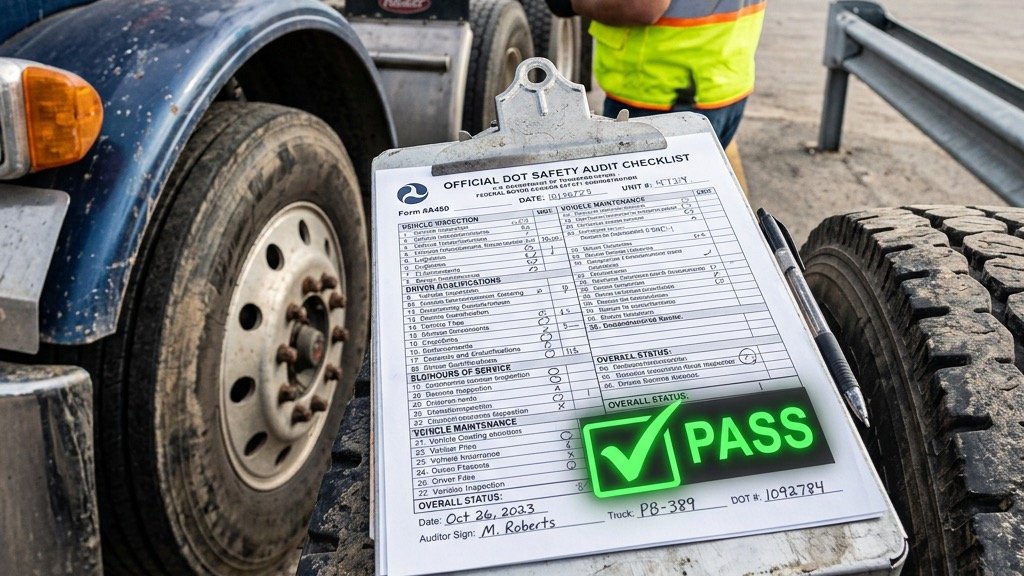
A New Entrant safety audit examines controls and records of covered new motor carriers. Preparation means demonstrating real practices, not simply filling folders. Determine applicable rules, retain evidence from the start and respond to the auditor's notice with coherent, complete records.
1. Identify the program and audit request
Do not treat an MC application as the program's only trigger. Review your new-carrier status with FMCSA. Its general guidance describes 18 months of monitoring and an audit within the first 12 months of operations; passenger and special cases need specific review. Save the notice, response date, requested period, delivery method and verified contact.
2. Organize records by safety area
| Area | Locate |
|---|---|
| Drivers | Qualification files, licensing and medical evidence where required. |
| HOS | Duty records, supporting documents and justified exceptions. |
| Vehicles | Inspections, maintenance, defects and repairs. |
| Drug/alcohol | Covered program, tests and queries. |
| Operation | Insurance, accident register and requested fleet details. |
Index by driver and unit. Clearinghouse registration alone is not a complete testing program.
3. Trace sample trips end to end
- Choose trips in the requested period.
- Match driver and vehicle to current qualification records.
- Compare HOS/ELD with supporting documents.
- Check inspections and defect repairs.
- Document discrepancies and fix current practices without inventing past records.
Completion check: a file explaining actual operations and controls, not blank forms.
4. Review exceptions and critical failures
Not every operation requires CDL or ELD, but an exception needs support and does not remove unrelated requirements. Under the property-carrier rule, a no-defect DVIR is not federally required when no deficiency was found or reported; inspections and repairs still matter.
FMCSA identifies specific automatic-failure violations involving testing, drivers, insurance and unsafe/out-of-service operations. Review the official list and address actual risks before dispatch.
5. Respond and follow the outcome
Check legibility, dates, signatures and correspondence with each request. Use the designated channel and retain delivery evidence. Explain missing records rather than fabricating or backdating them.
Review the outcome and any corrective-action instructions and deadlines. Administrative assistance cannot guarantee a pass. Maintain controls after the audit and connect them with your startup and operating process.
Frequently asked questions
Does buying an ELD guarantee a pass?
No. Correct use, records and all other applicable safety controls matter.
Is Clearinghouse the same as a consortium?
No. Registration, queries, testing and program administration are different related duties.
Can missing records be created later?
Document real evidence and correct processes; do not fabricate historical records.
Official sources and update
Reviewed . Confirm current agency instructions before filing.
Carrier Compliance Advice
Speak directly with our compliance experts in Kearny, NJ.
📞 (862) 350-0159Main Headquarters
Kearny, New Jersey
Mon - Fri: 8:00 AM - 7:00 PM, Sat: 9:00 AM - 3:30 PM

Bilingual guidance for your next step
Verónica Vanessa Quevedo
Owner and Managing Executive · Easy Truck Solutions
Not sure which filing applies, what documents you need, or where to start? Verónica and the Easy Truck Solutions team can help you understand your situation and organize the next steps, in English or Spanish.
Tell us where your company is based, the type of truck you operate and what you need to resolve. You can start with a call, a WhatsApp message or an appointment.
Request Compliance Consultation
Enter your details and a trucking compliance specialist will contact you immediately.