Form 2290: First Use, Taxable Gross Weight and Schedule 1
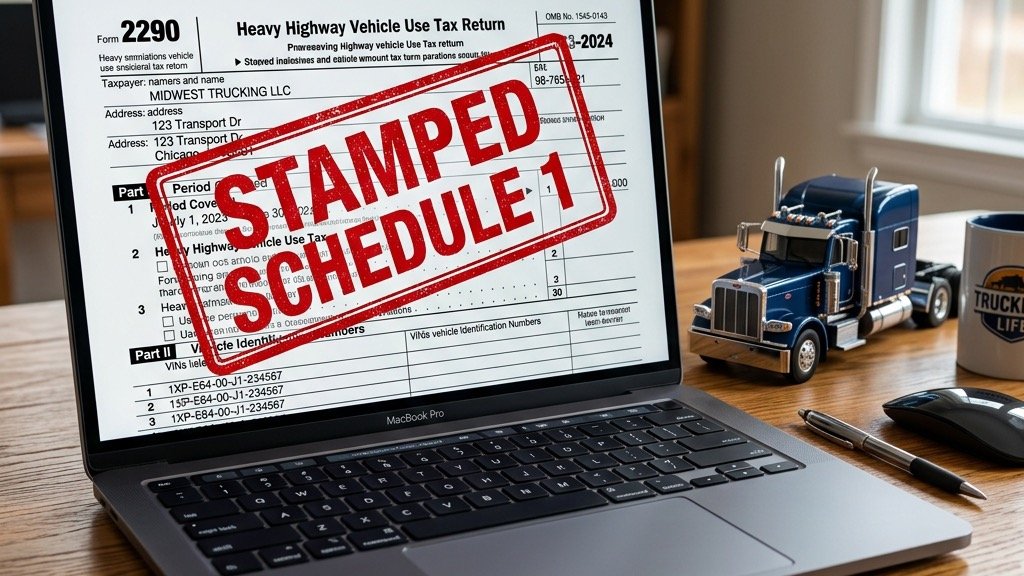
Form 2290 reports Heavy Highway Vehicle Use Tax. Evaluate taxable gross weight and use within the tax period rather than simply copying a truck's GVWR label. An accepted Schedule 1 supports registration transactions; a submitted application alone does not prove IRS acceptance.
1. Identify the taxpayer and taxable vehicles
Check whose name the vehicle is registered or required to be registered in, and whether taxable gross weight reaches 55,000 pounds. The tax period runs July 1 through June 30. Used purchases, sales and special configurations need their applicable instructions. Use the business EIN, not an SSN, and match IRS name records.
2. Prepare the four essential inputs
- Taxpayer name, EIN and address.
- VIN checked against title, registration or the vehicle.
- Taxable gross weight under the IRS definition for vehicle, trailers and load.
- Month of first highway use in the tax period.
Completion check: reviewed data per vehicle. For a newly issued EIN or name mismatch, consult e-file guidance before repeated submissions.
3. Determine timing and tax treatment
The general deadline is the end of the month after first use, subject to IRS adjustments and exceptions. July first use commonly leads to August; later first use has another deadline. Use the current table for weight category, first-use month and applicable treatment.
Expected use of 5,000 miles or less, or 7,500 for qualifying agricultural vehicles, may support suspension. Suspension generally means filing the required statement rather than ignoring Form 2290.
4. File and verify acceptance separately from payment
- Review taxpayer, vehicles and period.
- Select a filing method; follow IRS e-file requirements for returns with 25 or more vehicles on which tax is paid.
- Retain acceptance or rejection.
- Resolve the stated rejection before resubmitting.
- Verify payment and obtain the accepted Schedule 1.
Timing depends on acceptance and processing. Immediate delivery is not guaranteed. Provider service fees are separate from federal tax.
5. Check Schedule 1 and use the correct correction process
Compare EIN, period, VIN and categories. Retain the return, Schedule 1 and payment evidence. VIN corrections, increased weight, exceeding suspended mileage and vehicle sales may require different procedures; do not simply duplicate an original return. DMV requirements and documentation exceptions must be checked for the transaction. Schedule 1 does not replace plates, title, insurance or IFTA.
Frequently asked questions
Is taxable gross weight the same as GVWR?
Not necessarily. Apply the IRS tax definition for the relevant configuration and load.
Can low mileage mean no filing?
Tax suspension can still require a return. Review the conditions.
Does paying produce an accepted Schedule 1?
Verify IRS acceptance separately from payment.
Official sources and update
Reviewed . Confirm current agency instructions before filing.
Carrier Compliance Advice
Speak directly with our compliance experts in Kearny, NJ.
📞 (862) 350-0159Main Headquarters
Kearny, New Jersey
Mon - Fri: 8:00 AM - 7:00 PM, Sat: 9:00 AM - 3:30 PM

Bilingual guidance for your next step
Verónica Vanessa Quevedo
Owner and Managing Executive · Easy Truck Solutions
Not sure which filing applies, what documents you need, or where to start? Verónica and the Easy Truck Solutions team can help you understand your situation and organize the next steps, in English or Spanish.
Tell us where your company is based, the type of truck you operate and what you need to resolve. You can start with a call, a WhatsApp message or an appointment.
Request Compliance Consultation
Enter your details and a trucking compliance specialist will contact you immediately.