IFTA for Owner-Operators: Requirements and Quarterly Filing Steps
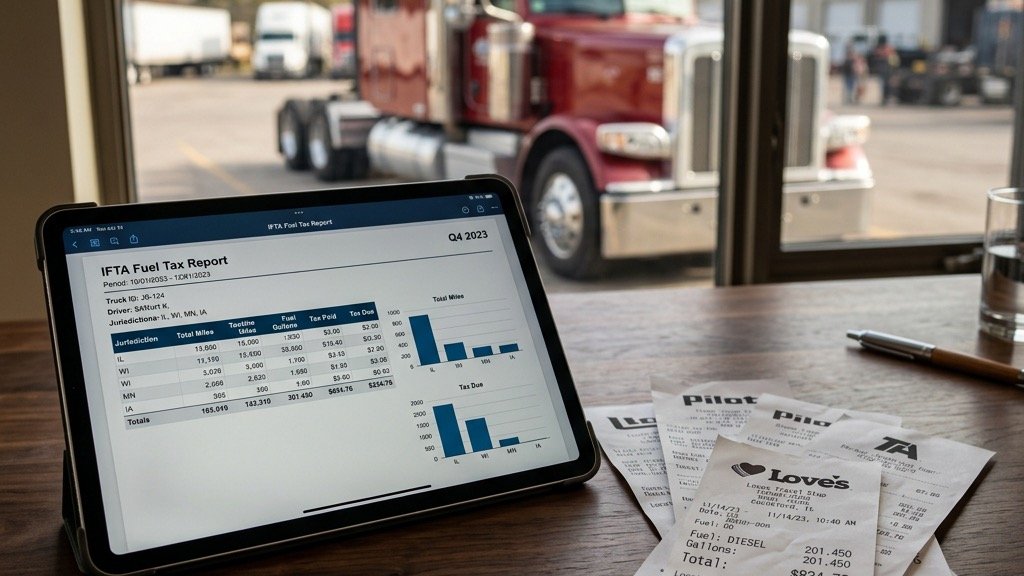
IFTA provides fuel tax reporting through a base jurisdiction for qualifying vehicles and operations. Decals do not replace quarterly returns. A reliable filing begins with trip and purchase records, reconciles the figures and ends with acceptance and any required payment.
1. Confirm vehicle and operation eligibility
For NJ-based operations outside the base jurisdiction, review the vehicle criteria: two axles with gross or registered weight over 26,000 pounds, three or more axles regardless of weight, or a combination exceeding 26,000 pounds. Not every commercial vehicle needs IFTA.
If leased to another carrier, document who reports distance and fuel. Do not infer responsibility solely from a plate. IRP covers registration; IFTA covers fuel tax reporting.
2. Gather records by vehicle and trip
Build a period folder with distance reports, fuel receipts and vehicle details. Retain the source detail behind totals; an ELD summary without traceable trips may not explain a return.
- Distance by unit and jurisdiction with dates and supporting trip records.
- Fuel dates, seller/location, type, quantity and purchaser/unit evidence meeting applicable rules.
- Bulk fuel, corrections, added vehicles and idle periods identified separately.
Completion check: supportable data, not estimates inserted to fill blanks.
3. Reconcile mileage, gallons and credits
- Check all account vehicles and the entire quarter.
- Investigate odometer gaps, duplicate trips and missing jurisdictions.
- Remove unrelated fuel and unsupported credits.
- Review fleet fuel economy and unexplained changes.
- Use the correct reporting-period rates and base-jurisdiction rules.
The result may be tax due or a credit. It is not a single rate applied to all fuel purchases. Consult the manual for taxable distance and credit treatment.
4. File the return and verify payment
Nominal due dates are April 30, July 31, October 31 and January 31. NJ moves a Saturday, Sunday or legal holiday to the next business day. Confirm account, period and rates before submission.
An active account still has reporting obligations during idle quarters. Follow the no-activity procedure when appropriate. Save acceptance and payment evidence; submitting a return and paying its balance are separate checks.
5. Correct errors and retain evidence
Keep the original return, document discrepancies and follow amendment instructions. Do not edit unsupported data just to make totals match. Late filing can lead to penalties, interest or account action under the applicable rules. Back up records for the required retention period and complete a formal account closure when needed.
Frequently asked questions
Do I report an idle quarter?
Review and complete the required no-activity return while the account remains active.
Can good records prevent an audit?
No. They support review but do not guarantee that an account will not be audited.
Does every receipt qualify for credit?
No. It must satisfy documentation requirements and relate to the reported vehicles and fuel.
Official sources and update
Reviewed . Confirm current agency instructions before filing.
Carrier Compliance Advice
Speak directly with our compliance experts in Kearny, NJ.
📞 (862) 350-0159Main Headquarters
Kearny, New Jersey
Mon - Fri: 8:00 AM - 7:00 PM, Sat: 9:00 AM - 3:30 PM

Bilingual guidance for your next step
Verónica Vanessa Quevedo
Owner and Managing Executive · Easy Truck Solutions
Not sure which filing applies, what documents you need, or where to start? Verónica and the Easy Truck Solutions team can help you understand your situation and organize the next steps, in English or Spanish.
Tell us where your company is based, the type of truck you operate and what you need to resolve. You can start with a call, a WhatsApp message or an appointment.
Request Compliance Consultation
Enter your details and a trucking compliance specialist will contact you immediately.